Sakura Watch
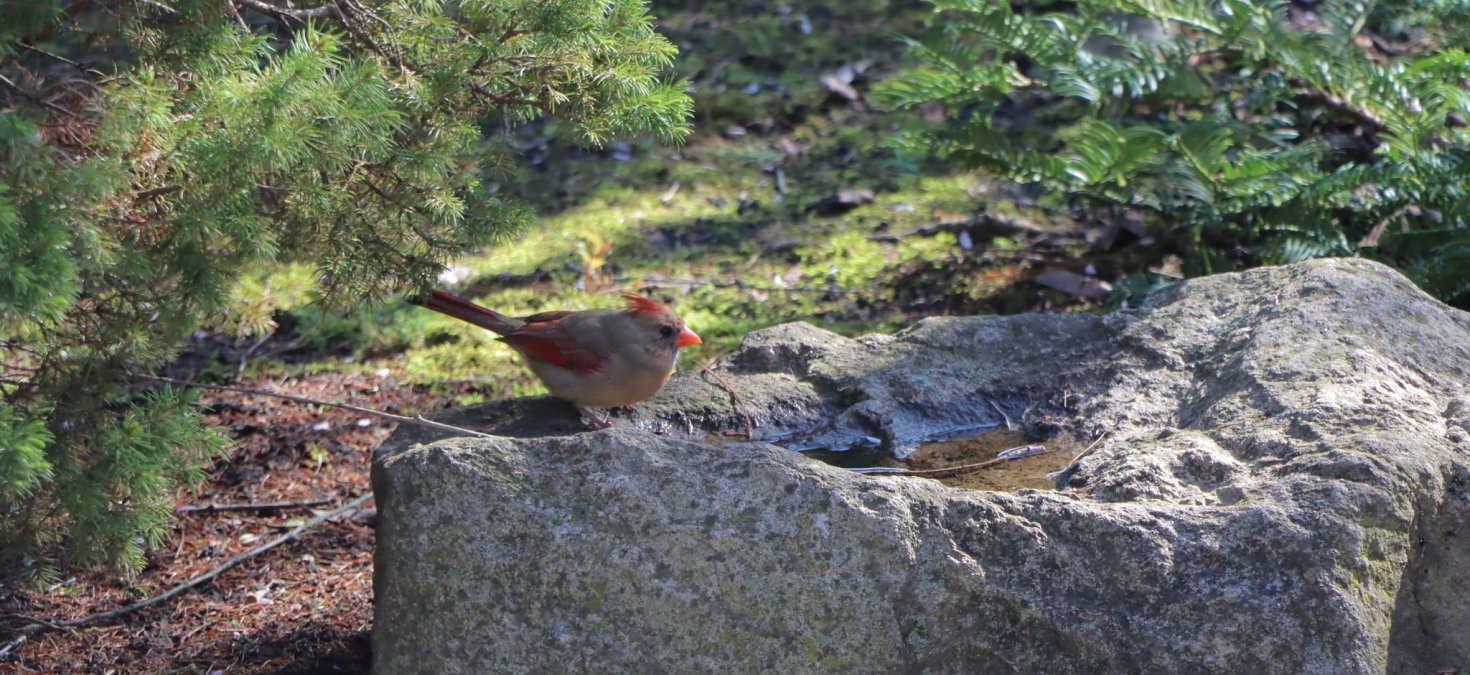
Sakura Watch is over! Stay tuned for the latest updates and photos on the Sen Cherry Tree Allée. Like humans, each tree has a life of its own and will do their best to greet visitors when they feel ready. Please enjoy the beauty of the gardens as they transition through the seasons! Follow Japan House on Facebook or Instagram and share your photos by tagging @japanhouseuofi or #japanhouseuofi!
Note: the tea garden is closed for construction of the Ogura-Sato Annex. Please avoid the fenced areas which indicate the construction zone, and follow instructions of staff and gardeners, particularly when garden work is occurring.
- Please do not climb the trees or stand in the bushes or garden beds
- Items should not be placed on branches or other plants as that can injure the plant
- Be respectful of other visitors and the gardens
- Be kind to wildlife - the gardens are their home!
- Please do not pick or step on flowers and other plants
- Children should be closely supervised and accompanied by an adult guardian
- Pets must be on leashes
- Clean up after your pets
- Do not let pets roam in the tea garden or dry rock garden
- Garbage cans are located at the North and South Parking lots - please do not litter and take your trash with you!
- Please stay on the paths
- Please stay out of the dry rock garden
- Fishing and swimming are not allowed
- Do not bring fire, fireworks, furniture, or grills to the gardens
- Smoking is prohibited on all campus property at the University of Illinois at Urbana–Champaign
- Please do not carve, deface, or nail anything into garden fixtures. Acts of vandalism or unsafe behavior should be reported to Public Safety at 217-333-1216
- Bike racks are available at both North and South parking lots. For accessibility, please do not leave bikes in the gardens or block the paths. Bikes and strollers should not be brought on stone paths or into the gazebo.
- Follow the instructions of staff and gardeners and be mindful of signage indicating work or construction areas
- Be mindful of volume - Japanese gardens are tranquil spaces for reflection
We ask that visitors be respectful to our requests to keep you safe and keep the Japan House gardens beautiful! We welcome photography and filming but ask that people be mindful of their actions and surroundings so that everyone can enjoy the gardens. The building is not open to the public as it is a university teaching facility and there are no public restrooms in the Arboretum. Please be considerate when making plans to visit. Thank you!
Visitors are welcome to take photographs and videos for their own personal use and enjoyment. The Japan House gardens cannot be closed off or reserved for private photography sessions or events. Visitors cannot block off or restrict traffic to the tea garden or dry rock garden. To ensure a positive experience for all visitors, please abide by the following photography guidelines:
- Please respect and follow instructions of staff and gardeners, particularly when gardening work is occurring
- All visitors should remain on garden pathways at all times
- Do not disturb or remove plants
- Do not block pathways
- Do not climb garden fixtures, trees or rocks, enter water areas, or step into garden beds for photos
- Please do not bring furniture, decor, and props into the Japanese gardens or place them in garden beds (e.g. chairs, confetti poppers, balloons, tripods or lighting fixtures)
- Japan House is not responsible for loss, theft, or damage to equipment or personal belongings
- Drone aerial photography must abide by University of Illinois public safety guidelines for drones
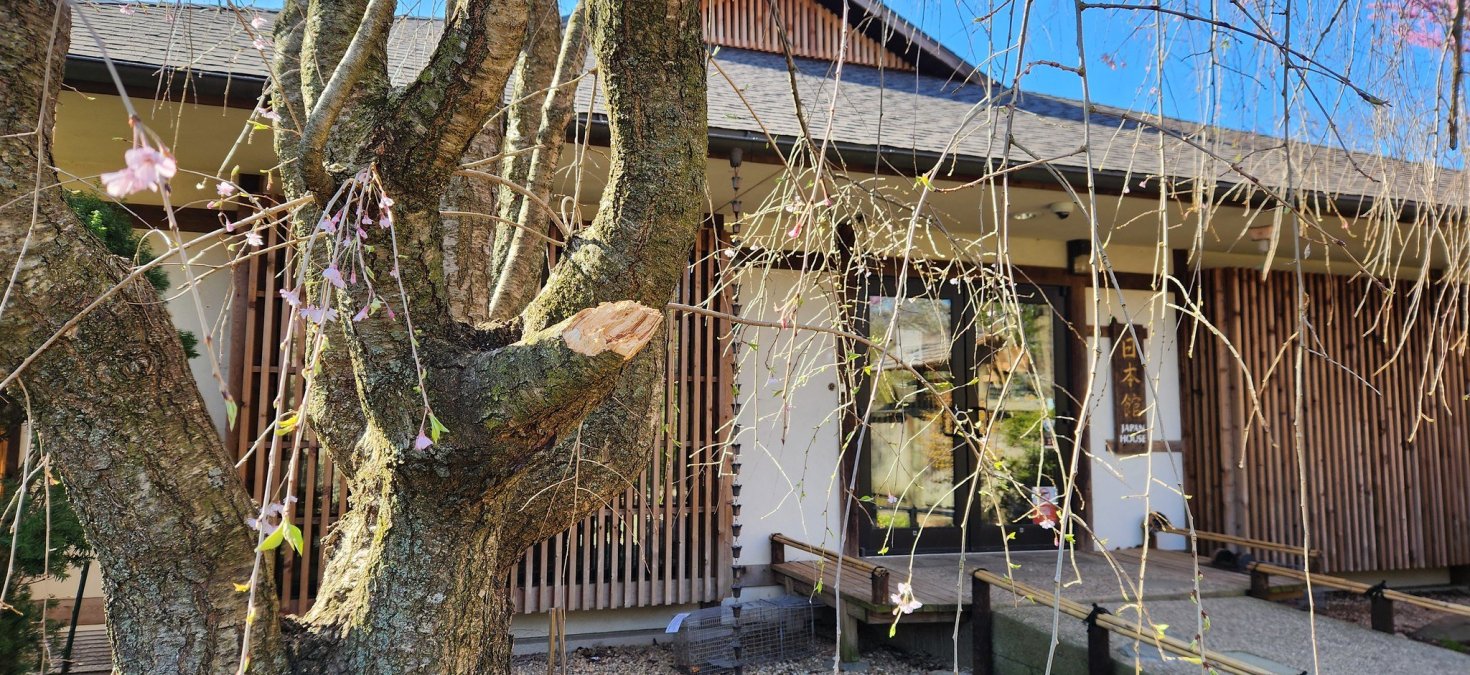
April 7 - Sakura Watch 2026 is coming to an end as the blossoms gently give way to green along the pond. In Japanese, this transition is called hazakura—the moment when cherry blossoms fade and fresh leaves emerge. While it marks the close of sakura season, it also signals the beginning of lush spring greenery and new life.
The weeping cherry by the front entrance is now producing small buds, offering a quiet promise of what is to come. Unfortunately, we recently experienced an incident in which a branch of the weeping cherry was snapped. We kindly remind all visitors that people—even children—should not climb or hang from branches. Sakura trees are delicate and not as sturdy as trees like oaks. Broken branches create pathways for disease, and we hope to preserve the health and beauty of these trees for as long as possible. We warmly welcome donations to support the ongoing care and maintenance of our Japanese gardens, which remain open and free to the public.
Support the gardens at: https://go.illinois.edu/jhgarden
Stage 1
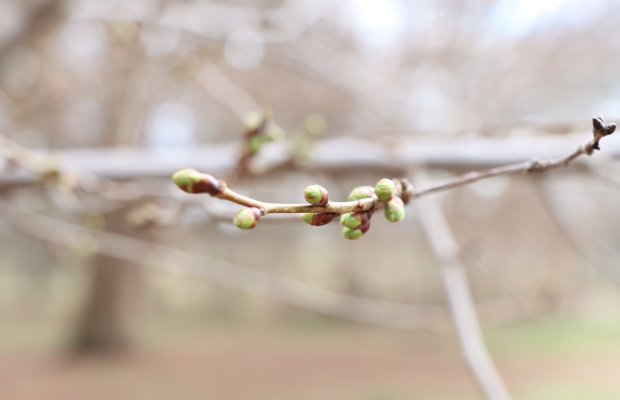
Green, round buds emerge.
Stage 2

Florets visible.
Stage 3
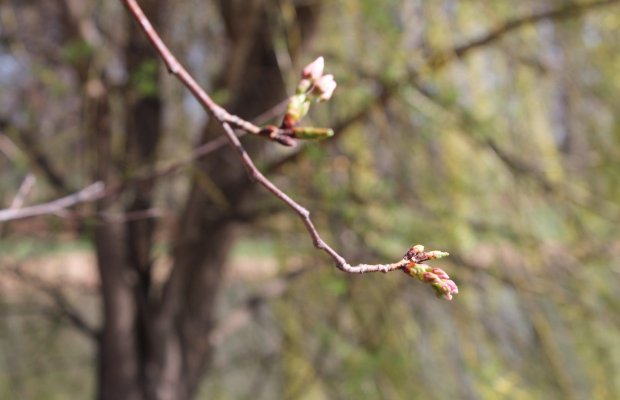
Extension of florets!
Stage 4
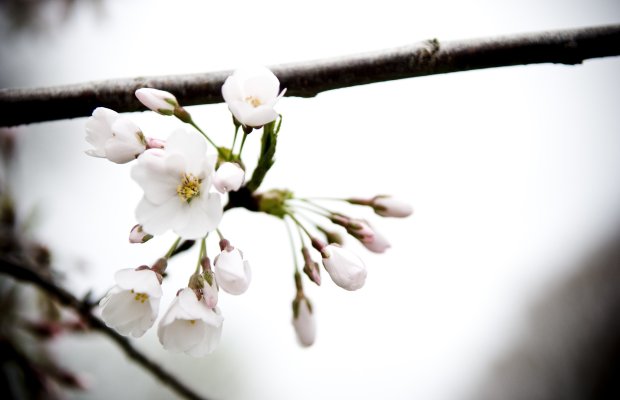
Peduncle elongation.
Stage 5
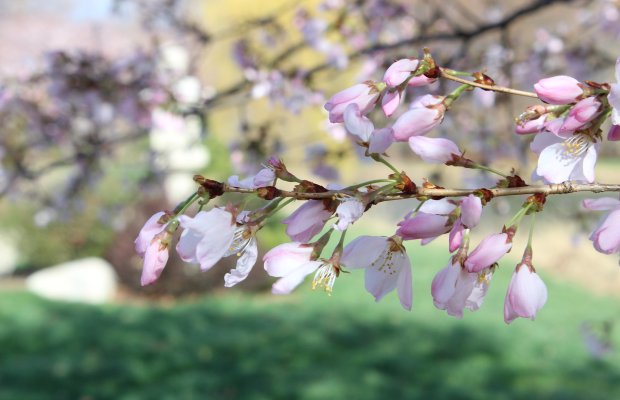
Fluffy white petals!
Stage 6
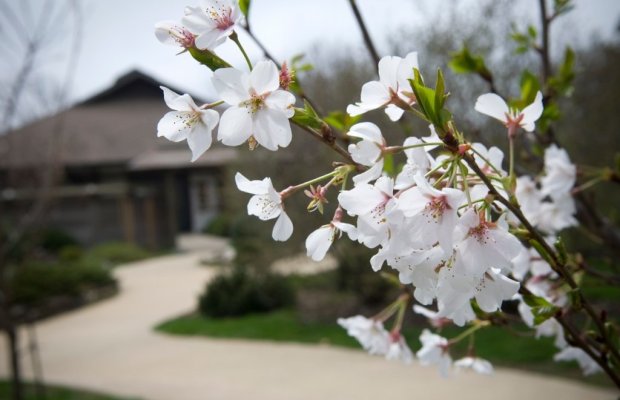
Stage 6 is "peak" bloom. Enjoy the sakura while they last! We hope the blossoms bring joy to visitors. Please continue to follow visitor guidelines and be respectful of the gardens.
For Japan House's 10th Anniversary in 2008, Dr. Genshitsu Sen, the 15th generation head of the Urasenke Tea School in Japan, donated 50 cherry trees to Japan House. There are three varieties of cherry trees: Yoshino (Prunus × yedoensis), Sargent (Prunus sargentii), and weeping (Prunus subhirtella var. pendula). They were planted under the direction of his gardener, Katsuo Kubo, who visited Japan House, to create the Sen Cherry Tree Allée.
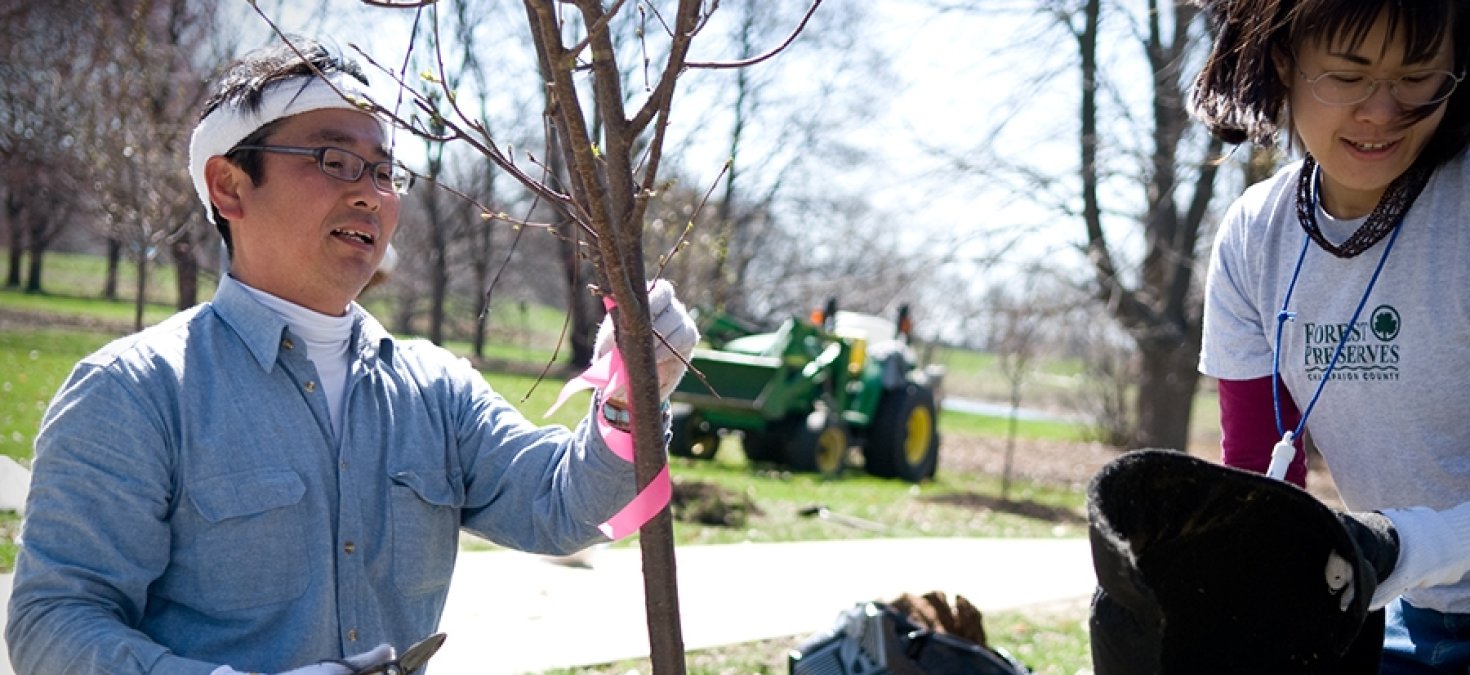
Katsuo Kubo planting a cherry tree!
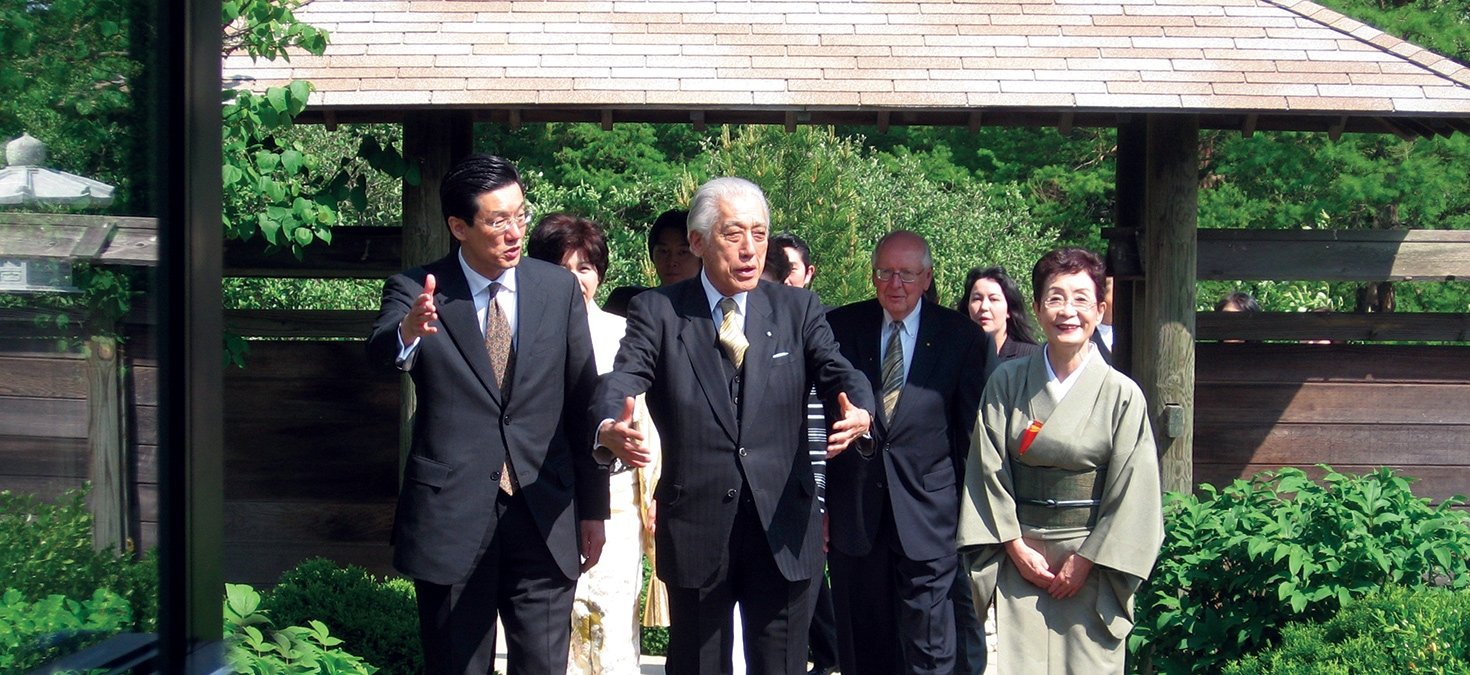
Dr. Sen visits Japan House for its 10th Anniversary.
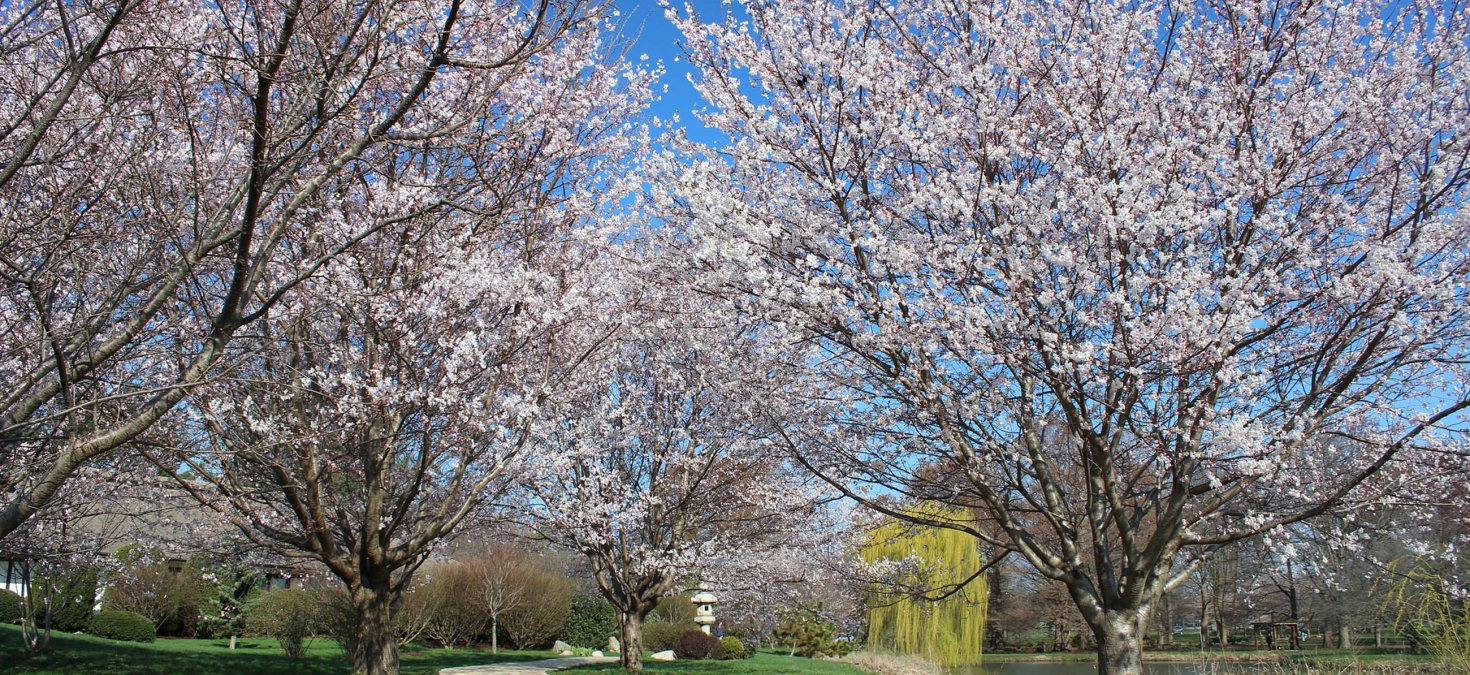
Each year, visitors come to appreciate the marvelous growth and fleeting beauty of the cherry trees!
Getting to Japan House
Location + Transportation
Japan House is located in Urbana, Illinois on the campus of the University of Illinois, near the Arboretum and the Vet Med complex, just south of Kirby/Florida Avenue on Lincoln Avenue.
The nearest bus stops are about a 2-3 minute walk from Japan House. For more information on public transportation options, please click here.
Parking
There are e-metered parking spaces in Lot F-31, which is north of Japan House (at St. Mary's Road and Lincoln Avenue) and Lot F-32 to the south of Japan House (on Lincoln Avenue across from the Vet Med complex).
Parking costs $1.25/hour Monday through Friday from 8AM-5PM. Please be sure to park at a meter. If you do not, you may receive a parking ticket. On weekends, parking is free and you may park anywhere in Lot F-31 and F-32. Parking will require downloading one of the apps shown on the meter's sign.
A guide to parking near Japan House can be found here.